At Bubble, we want to enable potential builders to create their ideas without code, so we are exploring and reviewing the many tools and software that entrepreneurs might use to build their ideas.
What is Backendless?
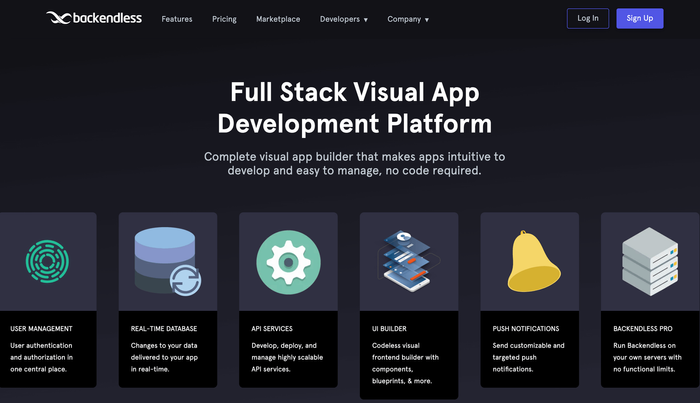
Backendless is a no-code platform offering a visual frontend builder and mobile backend-as-a -service features. Like many no-code platforms, Backendless offers frontend and backend tools, and it allows developers to create native mobile and web apps or to use Backendless as for their mBaaS needs.
Backendless offers three Cloud plans, which allow users to develop their apps using Backendless’ server space with limitations based on their exact plan. These plans are aimed at small businesses and individuals. Backendless also offers two “Pro” plans which allow users to install an on-premise instance of Backendless on their own servers which users can manage and scale independently.
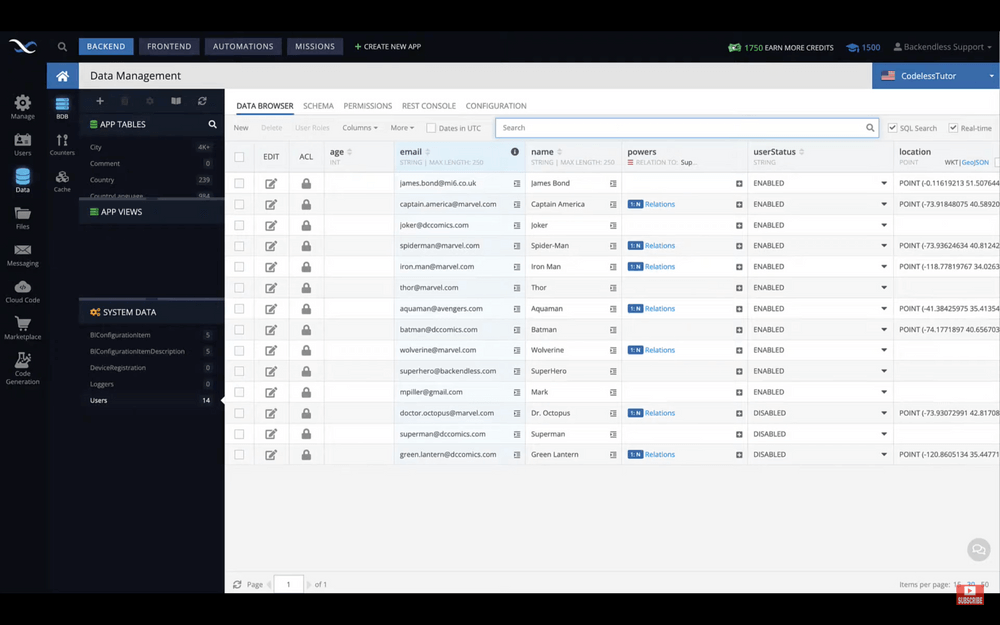
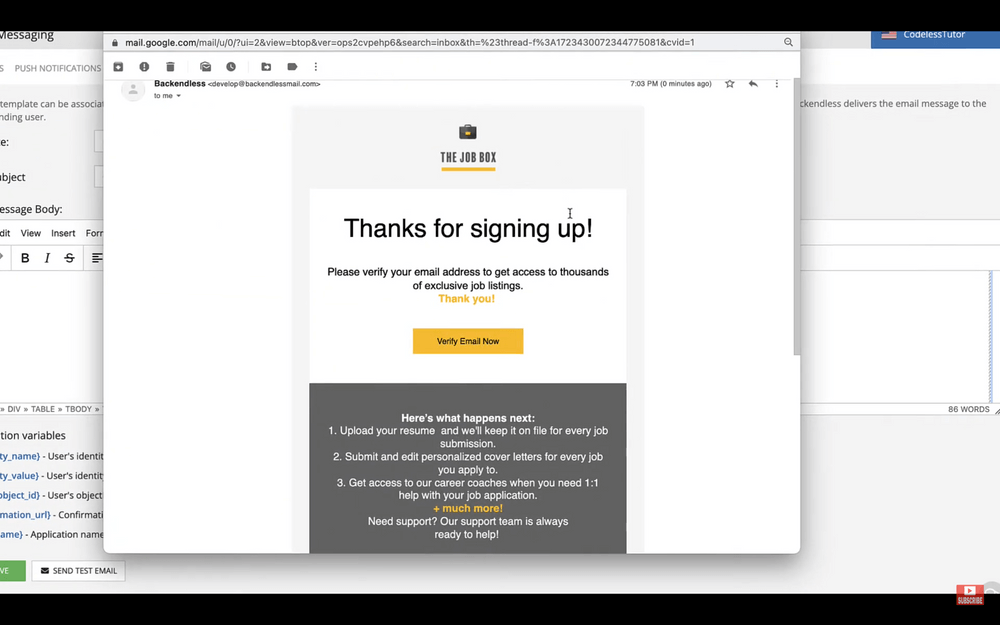
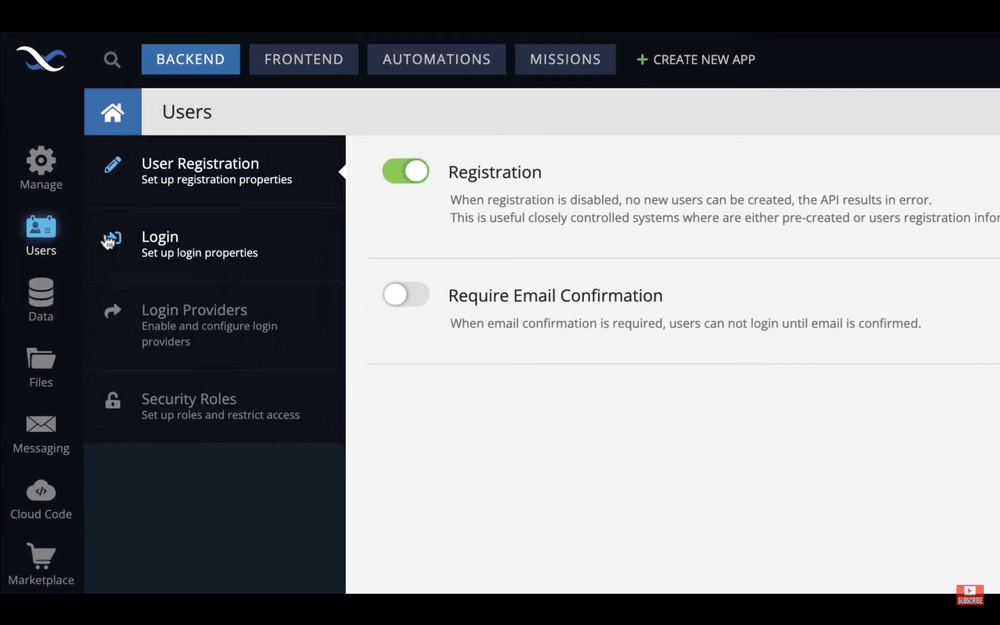
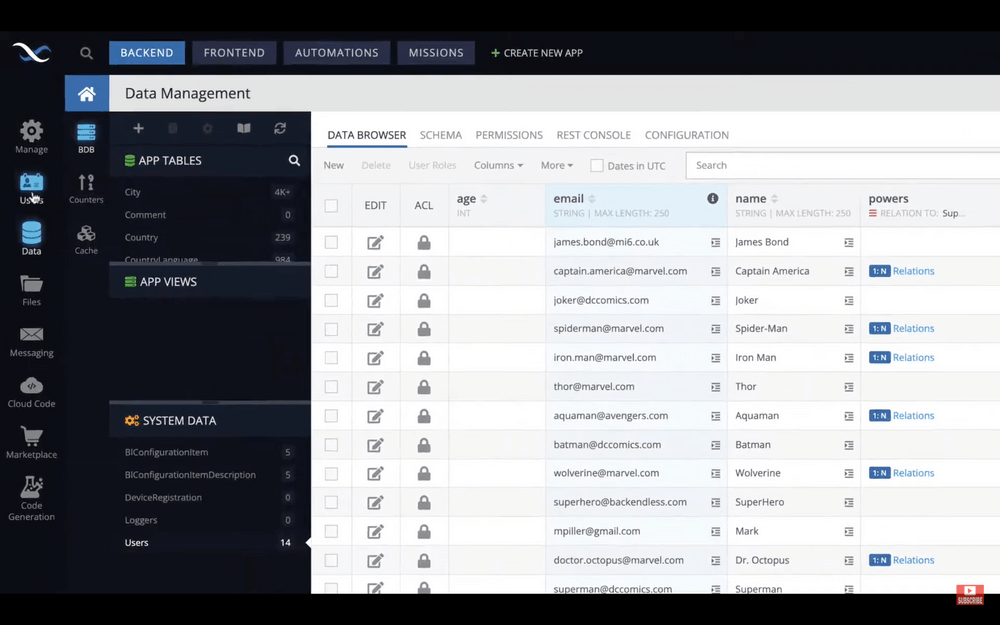
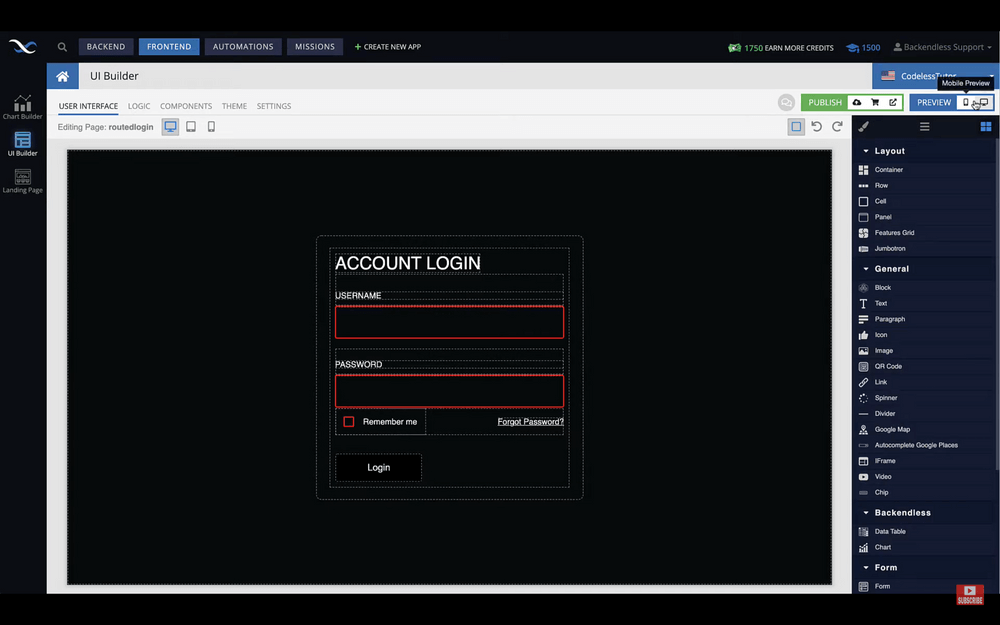
Backendless' User Management Course on Youtube
Who is Backendless for?
Backendless’ Cloud plans, which offer the tool and server space based on subscription tier, are most useful for small businesses or individual developers, especially those building toward a proof of concept: designers, startup founders, or freelancers, for example. Backendless’ dedicated plans—Backendless Pro and Managed Backendless—offer alternatives to the Cloud plans for companies who want to forgo Cloud plan limits by using their own or alternative server space. Backendless Pro allows users to install the service on-premise to any server, while Managed Backendless is a custom suite where Backendless provides server space and a custom build for the customer. These plans are more appropriate for medium to large businesses seeking rapidly scalable solutions.
Backendless Subscription Tiers
Pricing evaluation date in USD: April 2022
Backendless offers three tiers of its Cloud plan: the Springboard Plan, the Cloud 9 plan, and the Cloud 99 plan.
Users can start off with a free 30-day trial of the Cloud 99 plan, which is $149/month on a month-to-month plan. This plan allots 40,000,000 API calls, 200 data tables with 400,000 objects each, 20 GB of storage, flexible limits, and scaling, among other features.
After that trial ends, users have a couple options:
Users can join the Springboard plan for free by completing educational missions to unlock the “Free Plan Milestone.” Alternatively, they can buy access to the Springboard plan for a one-time fee of $50 in the Backendless Marketplace. The Springboard plan is similar to the Cloud 99 plan except that its limits are fixed and it doesn’t offer the same scaling; additionally, users get 1GB of space.
Finally, there’s the middle-tier Cloud 9 plan, which starts at $35 a month and offers less storage space but does allow for scaling. This plan would be most appropriate for users who have moved past proof of concept and would benefit from flexible limits but may not need as much as the Cloud 99 plan offers. This plan offers 10GB of disk space, 100 tables of 100,000 objects, an 10,000,000 API calls per month.
Backendless vs. Bubble: A Comparison
How does Backendless compare to a no-code platform like Bubble?
The main similarities between Bubble and Backendless include:
Both Bubble and Backendless offer a UI builder, API integration, front and backend tools, and plans that accommodate individuals and businesses ranging in size.
The main differences between Bubble and Backendless are:
Integrations/marketplace: As of this writing, Bubble has a more robust selection of integrations than Backendless, which has a little over a dozen integrations out, including one for Bubble. Bubble’s marketplace also features more templates, plugins, and available API connectors due to its longstanding community of developers. Backendless does have more dedicated SDKs for mobile and web developers, though, including Javascript, iOS, and Android kits.
Mobile/Native app: Whereas Bubble apps are made for web and need to be wrapped for mobile publishing, Backendless offers native mobile development tools. Since Backendless can be used for mobile or web apps, their subscription tiers are based on factors such as storage size and push notifications. Backendless can also be used primarily as a mBaaS if users don’t want to use their frontend tools as much.
Alternatives to Backendless
To build a full native or mobile app with no-code, you might want to check out no-code tools like Adalo, Glide, or Thunkable.
If you just need a landing page with a mobile-responsive design, then a templated website host with responsive designs like Squarespace or Wix should do the trick.
If your needs extend beyond CMS and you require full backend database functionality, no-code platforms like Bubble are a good alternative.
About Bubble
Bubble is a leader in the no-code movement. Bubble offers a powerful point-and-click web editor and cloud hosting platform that allows users to build fully customizable web applications and workflows, ranging from simple prototypes to complex marketplaces, SaaS products, and more. Over 500,000 users are currently building and launching businesses on Bubble – many have gone on to participate in top accelerator programs, such as Y Combinator, and even raise $365M in venture funding. Bubble is more than just a product. We are a strong community of builders and entrepreneurs that are united by the belief that everyone should be able to create technology.
Do you want your app featured by Bubble? Reach out to us and tell us about your app. In addition to this series, we sometimes select our best apps to showcase on our website.
Build for as long as you want on the Free plan. Only upgrade when you're ready to launch.
Join Bubble